
In softening Frankenstein’s tragedy, del Toro betrays the moral weight that made it timeless.
Guillermo del Toro’s Frankenstein has received mostly positive reviews since its release earlier this month, but from a literary standpoint, it’s a complete massacre of the original text. In fact, del Toro abandons Frankenstein’s moral fibre the same way Victor Frankenstein abandons his Creature — because it is much easier to run away in the face of a daunting task than buckle up and commit to a difficult task.
In order to explain what I mean, we need to go back a bit.
The ghost story contest that went down in history
You may know this story already.
It was a rainy evening in Switzerland, 1816, when gothic poet Lord Byron challenged his friends to a contest for who could write the best ghost story. The players? Byron’s personal physician, John Polidori, writer and poet Percy Bysshe Shelley and his 19-year-old fiancé, Mary Shelley, harbouring her own poetic interests.
From that night, not one, but two literary masterpieces were born. John Polidori, nicknamed ‘Poor Polidori’ by the rest of the group, authored ‘The Vampyre’ — the first vampire story ever.
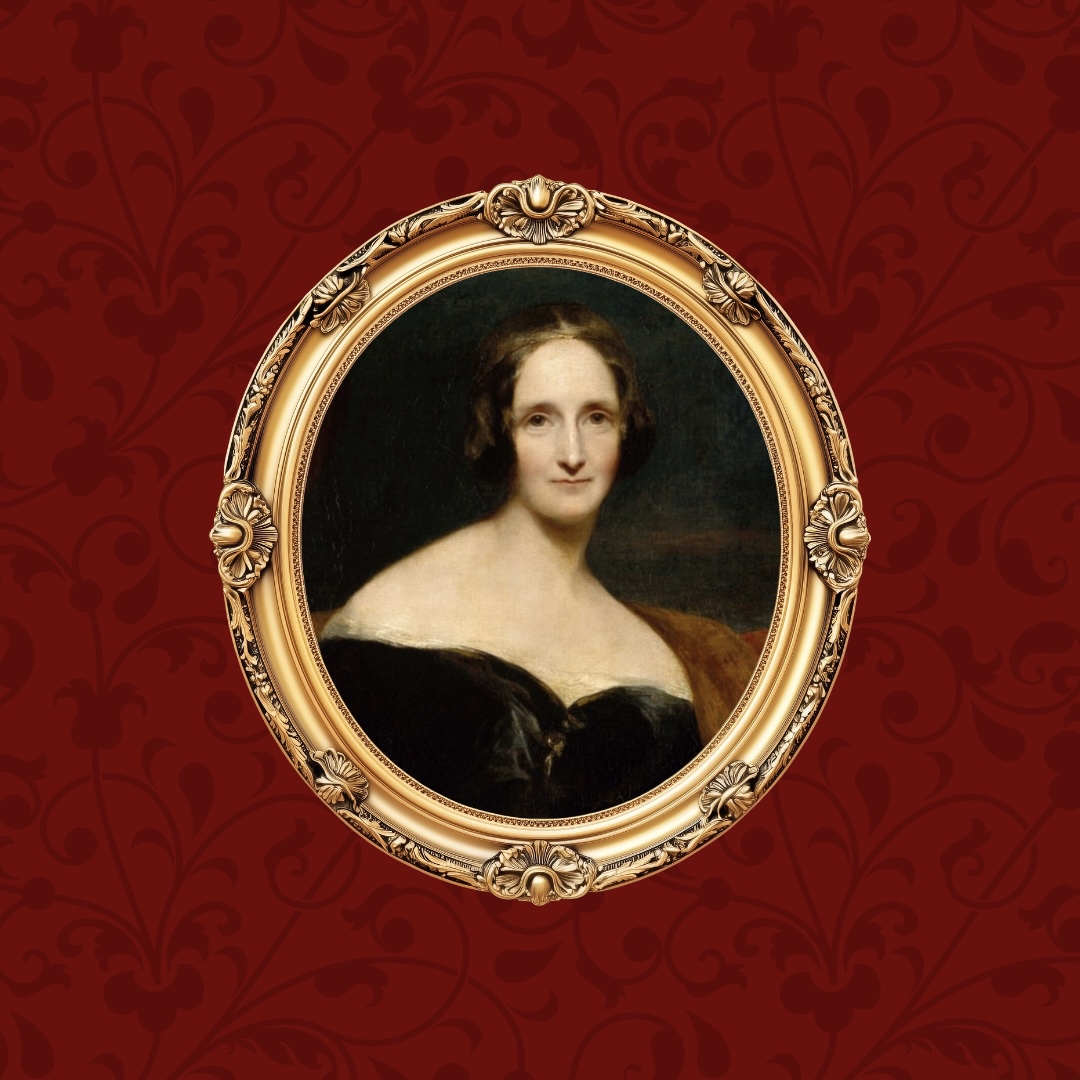
The other masterpiece came from the young Mary Shelley, who made history and invented science fiction with Frankenstein. At only 19 years old, she birthed a new literary classification, a powerful medium that uses scientific ideas and technological progress to hold up a mirror to humanity.
Here’s a little more about Mary Shelley. A few days after she was born, her mother died due to complications from childbirth. Shelley had multiple miscarriages throughout her life. The cyclical nature of life and death and the relationship between creators and creations was heavy on her mind for most of her life, but was especially strong that night stormy night in Switzerland where Frankenstein was born.
Mary Shelley in the modern world
Today, Mary Shelley is (mostly) acknowledged as the mother of science fiction, as it’s one and only creator, though there are many who still credit other male authors as the fathers of science fiction.
The story of Frankenstein has become distorted over time and for many people, the name conjures little more than a Halloween costume. Guillermo del Toro has continued the long standing legacy of misrepresenting the story of Victor and his Creature. As result, the original tale is not commonly known.
Not to worry — here are the Cliff’s Notes.
The Original Frankenstein’s monster (not the big green guy with bolts in his neck)
First we need to get one thing straight. The name Frankenstein refers to Victor Frankenstein, the mad scientist, not the “monster” (though many consider Victor to be the real monster… but that’s a topic for another time).
Frankenstein tells the tale of undergraduate medical student, Victor, who has been making a body made from pieces stolen from a cemetery, in an attempt to create life. You know the scene, metal slab, the cobbled together body in the shape of a man, a strike of lightning. To Victor’s surprise, it actually works but at the first sign of life from the Creature, Victor runs, confronted by his new and horrifying responsibility, leaving the Creature alone in the world.
The Creature learns about humanity by spying on a family for many years. Though they are unaware of his existence, the Creature grows fond of them, and one day builds up the strength to introduce himself. They immediately reject him, seeing only a monster. Despite his pleas for peace, they attack until he leaves.
The Creature will never find his place in the world, because there isn’t one — an important distinction that Victor never considered when building him. Too focused on the achievement of his success, rather than the consequences that would accompany it, Victor chooses to deny that he has any responsibility at all to his Creature and literally runs away every time he is confronted by his mistake.
It’s in Switzerland that the tale of Frankenstein ends, with the Creature hunting Victor with a cold vengeance and an ultimatum; make an equally-wretched companion for him, or be hunted by him for the rest of his life. Victor refuses time and time again, and eventually dies of illness. With all hope of ever belonging in the world now lost, the Creature commits suicide to escape the prison Victor bore him into.
Shelley vs del Toro — what’s the difference?
Frankenstein explores the consequences of abandoning your creations. Your children, if you will.
Shelley desperately wanted a child of her own and painfully familiar with the heartbreak of being abandoned by a parental figure. In a time when men often took many lovers and never claimed the resulting offspring — a trait Shelley likely observed in her friend Lord Byron, who had an affair with Shelley’s very own sister — Shelley demonstrates man’s envy of woman’s ability to create life, through the tale of a mad scientist’s hubris and naïveté.
Which brings us back to Frankenstein (2025). What is wrong with it exactly?
Guillermo del Toro gave his film a happy ending, where Victor finally accepts his “son” as he lays dying. The Creature forgives him for years of neglect. Having finally found the acceptance of others, the Creature walks off into the sunset after Victor’s death with newfound hope.
Thus, Shelley’s original moral message is divorced from the story. The deep-seated tragedy and real-world parallels of the original text have been stripped away, shrugging off the responsibility to Shelley’s vision, the same way Victor shrugs off the responsibility to his Creature mere moments after it is born.
These directorial choices wrap up the story with a happy little bow, undermining the features that have made Frankenstein a lasting and beloved tale. With this major plot change, del Toro wipes his hands of his duty, pardoning himself the responsibility to honour the original tale.
At more than 200 years old, Frankenstein still sells tens of thousands of copies each year. Does that sound like a story whose ending needs be improved?
But the disrespect doesn’t stop there.
The misogyny of Del Toro’s remake
Del Toro makes sure to drive the knife home, all the way to the hilt, once the final scene plays. The Creature walks off into the sunset and the screen goes to black. What appears next is a simple quote.
‘The heart will break and yet brokenly live on’ — Lord Byron.
Lord Byron. Really?
Slapping the name of a man (who is, let’s face it, a much lesser writer) over the iconic work of a woman who is still being overlooked for her contributions to literature, is a new level of blatant misogyny that left me too stunned to speak.
It could almost be forgiven if del Toro’s movie was just a bad adaptation (because most of them are) but to alter the ending to suit his own fractured views, and then credit a man as the “inspiration” behind the tale, is an appalling affront to the work of a truly great gothic and science fiction writer.
There’s a certain irony in making an adaptation of one of the world’s most famous cautionary tales — a project which I am sure required years of work and millions of dollars — and yet still not understand the story’s main lesson.
There’s a reason why Shelley’s tale is timeless. It confronts common societal issues and forces those who deny their parental duties to confront their mistakes. Frankenstein is not a happy story about forgiveness and fatherly love but rather, it is the antithesis of these things. Lord Byron did not “inspire” this novel; Shelley’s difficult life and her experience as a woman in a flawed society did.

The Final Word
Del Toro has butchered Frankenstein far more ignorantly than Victor patched together his Creature, but with the same amount of naive audacity, unchecked ambition and direction-less intent.
I’d like to end with a suggestion for an alternative quote to grace the screen at the end of Frankenstein (2025), and this one will actually be from the author herself. While there’s no shortage of impactful quotes from Mary Shelley, there is one that has been rattling around in my mind since the first time I read it.
“Beware; for I am fearless, and therefore powerful.”